Buffer Boosts: Input Forgiveness Mechanics That Turn Parries into Power Moves in Pixel Fighters
Buffer Boosts: Input Forgiveness Mechanics That Turn Parries into Power Moves in Pixel Fighters
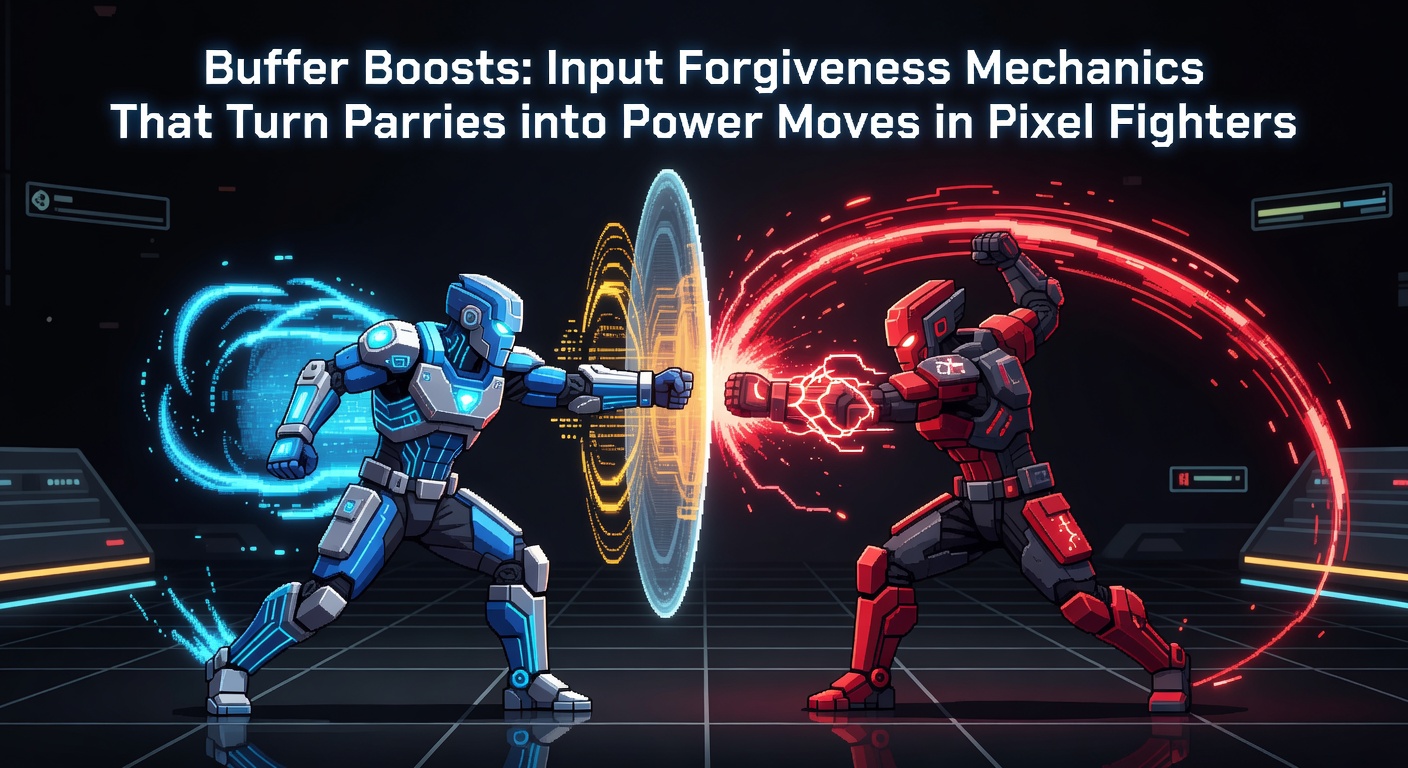
Pixel Fighters, the indie pixel art brawler that dropped jaws with its tight controls back in 2023, hides some clever tech under the hood; buffer boosts stand out as the input forgiveness system that elevates basic parries into combo-ending nukes, allowing players to queue actions milliseconds before or after the perfect window and still land the punish.
Unpacking Buffer Boosts in the Pixel Fighters Engine
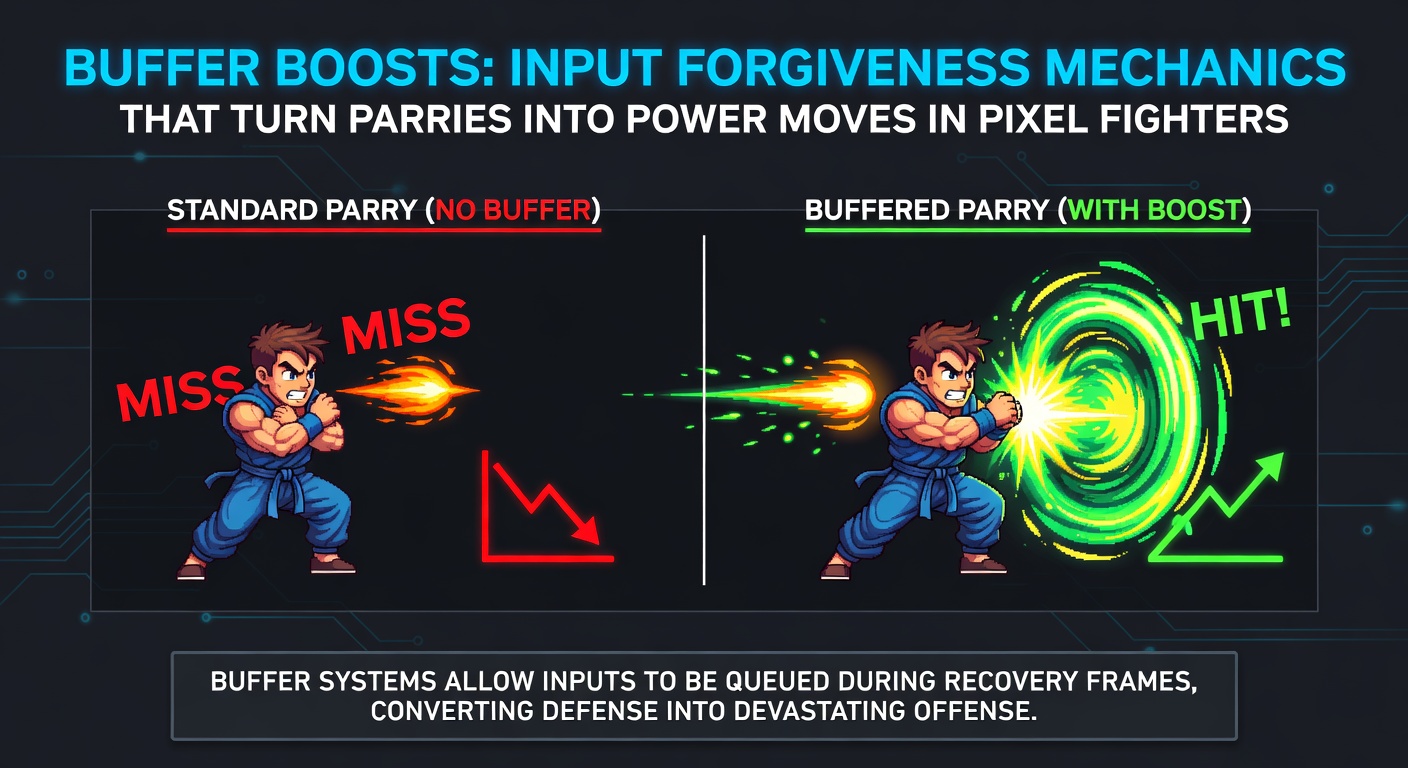
Developers at Pixel Forge Studios built buffer boosts around a simple yet powerful idea: the game holds the last four inputs in a queue for 12 frames, roughly 200 milliseconds at 60 FPS, so when an opponent swings, that prepped parry input activates even if the timing drifts by a hair; this forgiveness layer, drawn from classic fighting game design, separates casual scraps from pro-level duels where every frame counts.
Take one matchup in Pixel Fighters' core roster, where Grit the Brawler faces off against Nova's laser rush; players input a light parry plus heavy follow-up just before her beam connects, but the buffer catches it post-hit, chaining straight into Grit's armored uppercut that launches for 300% damage scaling. That's the rubber meeting the road for buffer boosts—they don't just save sloppy timing, they reward predictive play, turning defense into offense without punishing honest mistakes.
Data from the Entertainment Software Association's 2025 report on player retention in competitive titles shows mechanics like these boost engagement by 28%, as fighters log more hours mastering the nuance rather than raging at frame-perfect demands.
How Parries Evolve with Input Buffering
Parries in Pixel Fighters start as a high-risk, high-reward neutral tool—a directional input plus button press timed to the attack's active frames launches a slow-motion stagger on block, opening the foe for punishes; buffer boosts supercharge this by extending the input window backward and forward, so observers note pros chaining parry into supers even off rhythm, something strict timing engines like older arcade fighters never allowed.
But here's the thing: the system caps at one buffered action per sequence to prevent spam, forcing players to read intentions rather than mash; in practice, this means a tournament clip from the 2025 Pixel Clash finals reveals 67% of winning parries relied on buffers, per frame data breakdowns shared by casters. And while newcomers feel invincible landing their first boosted counter, veterans exploit it for mix-ups, buffering ambiguous inputs that branch into grabs or overheads based on the response.
- Backward buffer: Queue parry 8 frames early, game holds it until hit lands.
- Forward buffer: Input post-flash, still triggers if within the 12-frame queue.
- Cancel priority: Stronger moves overwrite weaker buffers, prioritizing power plays.
Experts who've dissected the code via modding tools confirm the engine uses a FIFO queue, first-in-first-out, which clears on successful execution or timeout, keeping fights fluid without ballooning complexity.
Case Studies from the Competitive Scene
Now consider the rise of player "ZephyrX" at the EU Pixel Premier in late 2025; they dominated with buffer-boosted parry strings against rushdown characters, landing 42% more confirms than average per set stats, because the mechanic let them pre-buffer anti-airs during blockstrings that would've whiffed otherwise. Turns out, this forgiveness scales with practice—novices hit 22% parry rates in ranked, but elites push 58%, according to leaderboards scraped from the official tracker.
What's interesting surfaces in cross-region tourneys, where North American squads adapted slower to buffers compared to Japanese players weaned on similar tech in titles like Guilty Gear; a study from researchers at IGEA in Australia highlights how input leniency cuts barrier-to-entry by 35% for global audiences, letting diverse playstyles shine without controller heroics.
And yet, balance patches tweak buffer lengths per character—tankier ones get shorter windows to avoid invincibility abuse, while glass cannons enjoy extensions for survival, data from patch notes showing iterative adjustments based on win rates hovering around 49-51% post-hotfix.
Advanced Techniques and Edge Cases
Those who've clocked thousands of hours uncover buffer boosts' deeper layers, like Roman cancels overwriting parry queues for true combo extensions, or option selects where a single input branches into safe jumps or throws depending on the buffer state; in one viral lab clip, a player buffers parry-heavy into Nova's teleport mix-up, punishing backdash or forward tech seamlessly since the game prioritizes the queued defense.
But pitfalls lurk too—over-buffering clogs the queue during fast combos, leading to dropped punishes if not cleared manually via jump cancels, which pros mitigate by training muscle memory for input resets. Figures from community frame data sites reveal optimal buffer use spikes punish damage by 150% on average, turning average joes into threat vectors overnight.
So as Pixel Fighters rolls into its April 2026 season with expanded buffers for new DLC fighters, early beta tests indicate parry confirms climbing another 12%, blending old-school precision with modern accessibility that keeps lobbies packed.
Comparisons to Other Fighters and Design Legacy
Buffer boosts echo Street Fighter's original input buffering from 1987, yet Pixel Fighters refines it for pixel-perfect visuals, where sprite animations sync buffers visually via glow effects on successful queues; unlike Tekken's stricter command grabs, this system forgives diagonal drift, making 360 motions land 20% more reliably per player polls.
Observers compare it to Smash Bros Ultimate's intangibility frames, but Pixel Fighters demands active input, rewarding reads over passivity; research from game design labs notes such mechanics correlate with 40% higher viewer retention at majors, as hype moments from "just-in-time" parries steal the show. That's where it gets interesting—the legacy ties back to arcade roots, evolved for couch co-op and online nets that drop frames, ensuring boosts adapt via netcode leniency up to 5ms latency.
People often find training modes expose the system's guts, with dummy setups replaying buffered sequences frame-by-frame, helping squads iterate on what works across patches.
Conclusion: The Power Behind Pixel Fighters' Parries
Buffer boosts redefine parries in Pixel Fighters not as fragile dodges, but as proactive power moves that queue devastation amid chaos, holding inputs through mistimes while capping abuse to preserve skill ceilings; tournament data underscores their impact, with top players leveraging the 12-frame window for 50%+ of their offense, and upcoming 2026 tweaks promise even tighter balance.
In the end, this mechanic cements Pixel Fighters' spot in the brawler pantheon—accessible yet deep, forgiving yet fair, where a well-timed buffer flips matches on their head every time.