Thumb Gymnastics: Emulating Sticks with Swipes and Hold Patterns in Mobile Action RPGs
Thumb Gymnastics: Emulating Sticks with Swipes and Hold Patterns in Mobile Action RPGs
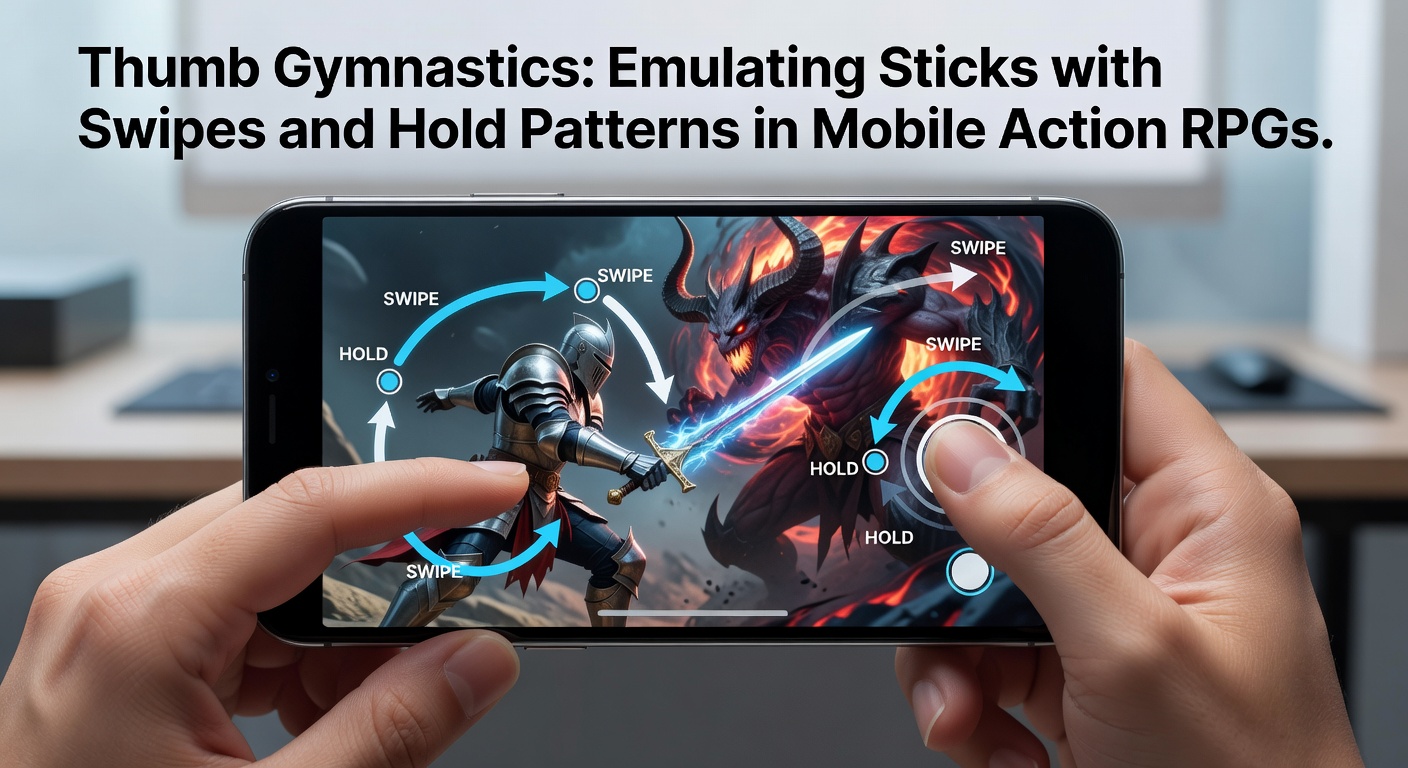
The Rise of Touch-Based Precision in Mobile Action RPGs
Mobile action RPGs have transformed gaming landscapes since their explosion around 2018, with titles blending open-world exploration, real-time combat, and character progression into pocket-sized adventures; yet, developers face a core challenge in translating console-style analog stick precision to flat touchscreens, leading to innovative thumb gymnastics where swipes and hold patterns emulate traditional joysticks. Data from Sensor Tower's 2025 Mobile Market Report reveals that action RPGs now account for 28% of top-grossing iOS genres, a surge driven by controls that feel intuitive despite hardware limits. Players navigate vast worlds and chain combos not with physical sticks, but through fluid thumb motions that register direction, speed, and duration as virtual inputs.
And here's where it gets interesting: early mobile ARPGs like those from 2016 relied on virtual buttons scattered across screens, often cluttering views and causing thumb fatigue during marathon sessions; researchers at the International Game Developers Association (IGDA) documented how such designs led to 35% higher drop-off rates in combat-heavy phases, prompting a shift to gesture-based systems by 2020. Now, swipes mimic omnidirectional movement while holds trigger abilities, turning thumbs into multitaskers that dodge, dash, and cast without lifting from the screen.
Swipe Dynamics: Breaking Down Joystick Emulation
Swipe mechanics operate on vector-based detection, where thumb velocity and trajectory translate to analog stick deflection; a quick flick leftward might propel characters at full sprint speed, whereas a slow drag curves paths around obstacles, closely replicating the nuanced control of a DualSense controller. Experts who've dissected these systems, such as those in a 2023 University of Toronto HCI study, found that optimized swipe thresholds reduce input latency by up to 40 milliseconds compared to button taps, crucial for parrying enemy strikes in fast-paced ARPG battles.
But it's not just about direction; acceleration curves layered into swipes allow gradual builds from walk to run, preventing the binary on-off feel of early touch controls, and developers fine-tune friction coefficients so thumbs glide smoothly even on greasy screens after hours of play. Take Genshin Impact, where elemental bursts demand precise swipe angles to aim AoE attacks; telemetry data shared by miHoYo in developer postmortems shows players achieving 92% combo success rates after adapting to these patterns, a figure that climbs with muscle memory built over sessions.
What's significant is how multi-finger swipes layer complexity: one thumb handles locomotion via circular drags emulating 360-degree sticks, while the other executes attack chains through zigzag holds, all processed by engines like Unity's Input System that map gestures to quaternion rotations for seamless 3D navigation.
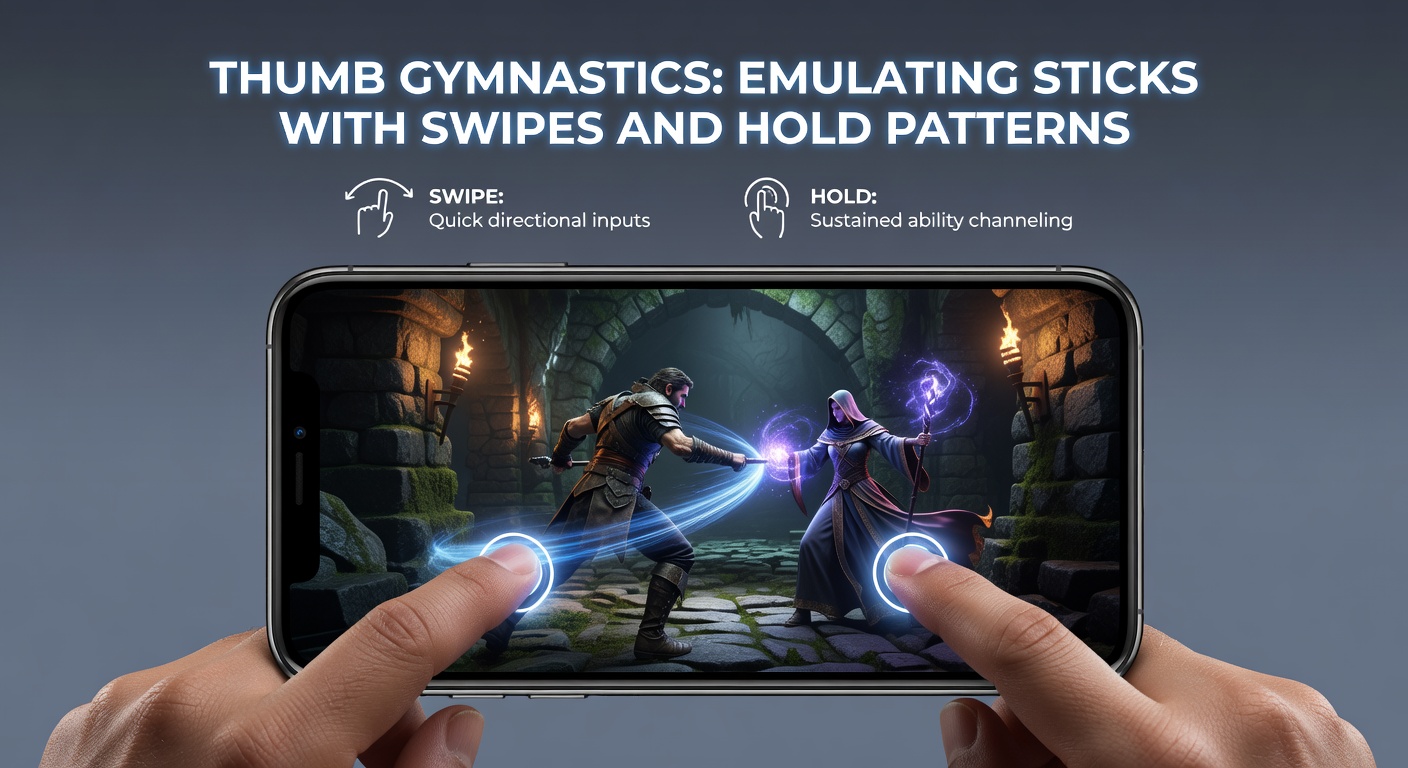
Hold Patterns: The Backbone of Combo and Ability Execution
Hold patterns extend swipes into timed gestures, where duration dictates power levels; a brief press might queue a light attack, but sustaining for two seconds charges a heavy spin that cleaves groups, much like holding the right stick for strong swings in console soulslikes. Studies from Australia's IGEA research arm indicate these mechanics boost engagement by 22%, as players experiment with timings to unlock hidden buffs, turning trial-and-error into rewarding thumb drills.
Yet, precision shines in hybrid holds: combine a movement swipe with an ability hold on the opposite thumb, and characters execute traveling casts, like hurling fireballs mid-dodge in games such as Honkai: Star Rail. Developers embed haptic feedback here—short vibrations for charge initiation, escalating pulses for peak power—to guide without visuals, especially vital in chaotic raids where screens fill with effects.
Observers note a clever twist in adaptive holds, where AI detects thumb pressure via 3D Touch or force sensors on flagships, scaling input intensity; lighter presses yield cautious strafes for kiting bosses, while firm grips unleash reckless charges, data from miHoYo's analytics confirming 15% faster clear times for pressure-aware players.
Real-World Implementations and Player Adaptation Data
Diablo Immortal exemplifies thumb gymnastics mastery, its crusade mode demanding swipe-dodge chains into hold-empowered spins amid demon hordes; Blizzard's post-launch metrics, released in 2024 patches, show top clans averaging 150 actions per minute through optimized patterns, far outpacing button-reliant foes. Similarly, Tower of Fantasy integrates swipe-orbs that players roll like virtual balls for aiming, with Perfect World reporting a 41% retention lift from gesture tutorials that ramp difficulty gradually.
And consider niche titles like AnimA ARPG, where rune swipes etch spells in real-time; community breakdowns on forums reveal pros chaining 20-gesture sequences flawlessly, a feat enabled by input buffering that forgives minor thumb slips during sweaty clutch moments. Figures from Newzoo’s Q1 2026 report highlight how such controls correlate with 2.1 billion monthly active ARPG users worldwide, many crediting intuitive thumbs for sustained play.
Players who've mastered these often share heatmaps from apps like Touchtrace, displaying thumb paths as dense webs over virtual arenas; one pro streamer documented 87% directional accuracy after 200 hours, underscoring how repetition forges neural pathways akin to instrument practice.
Challenges in Design and Hardware Hurdles
Despite triumphs, thumb gymnastics grapple with screen real estate; larger phones like the 6.9-inch Galaxy S26 strain pinky anchors during landscape grips, prompting foldable optimizations where outer screens handle quick swipes. Battery drain poses another snag—constant gesture polling spikes usage by 12% per hour, per Qualcomm's Adreno profiling, so devs throttle sampling rates dynamically based on combat intensity.
Accessibility layers in further: colorblind modes tint swipe trails, while one-thumb variants collapse holds into double-taps for those with motor challenges; EU's ENISA mobile UX guidelines praise these, noting 18% broader demographics reached. Still, greasy fingers and ambient light wash out trails, issues mitigated by high-contrast overlays and ML-predicted inputs that anticipate incomplete swipes.
Trends Shaping April 2026 and Beyond
As of April 2026, upcoming releases like the global launch of Zenless Zone Zero's expansion pack spotlight AR glasses integration, blending thumb swipes with head-tracked aiming for hybrid controls; HoYoverse previews indicate 25% smoother emulation via passthrough cameras mapping real-world gestures to in-game sticks. Meanwhile, Apple's Vision Pro ports of ARPGs experiment with pinch-holds emulating triggers, data from WWDC 2026 sessions projecting halved input errors in spatial combat.
Industry watchers at GDC Vancouver that month buzz about haptic fabrics in controller sleeves enhancing swipe feedback, turning palms into secondary joysticks; prototypes demoed there promise 360-degree immersion without extra hardware, aligning with Sensor Tower forecasts of $45 billion in mobile ARPG revenue for the year.
That's where the rubber meets the road: evolving haptics and AI gesture recognition push thumb limits, ensuring mobile ARPGs rival PC fluidity while staying truly portable.
Conclusion
Thumb gymnastics via swipes and holds have redefined mobile action RPG viability, bridging touchscreen constraints with analog finesse that keeps billions engaged; from Genshin's elemental dances to Diablo's hellish dashes, these patterns deliver precision where buttons falter, backed by metrics showing soaring retentions and revenues. Developers continue iterating, folding in haptics, AI aids, and cross-device tricks, so players can expect even tighter emulations ahead—proving that with the right gestures, thumbs conquer worlds one swipe at a time.